
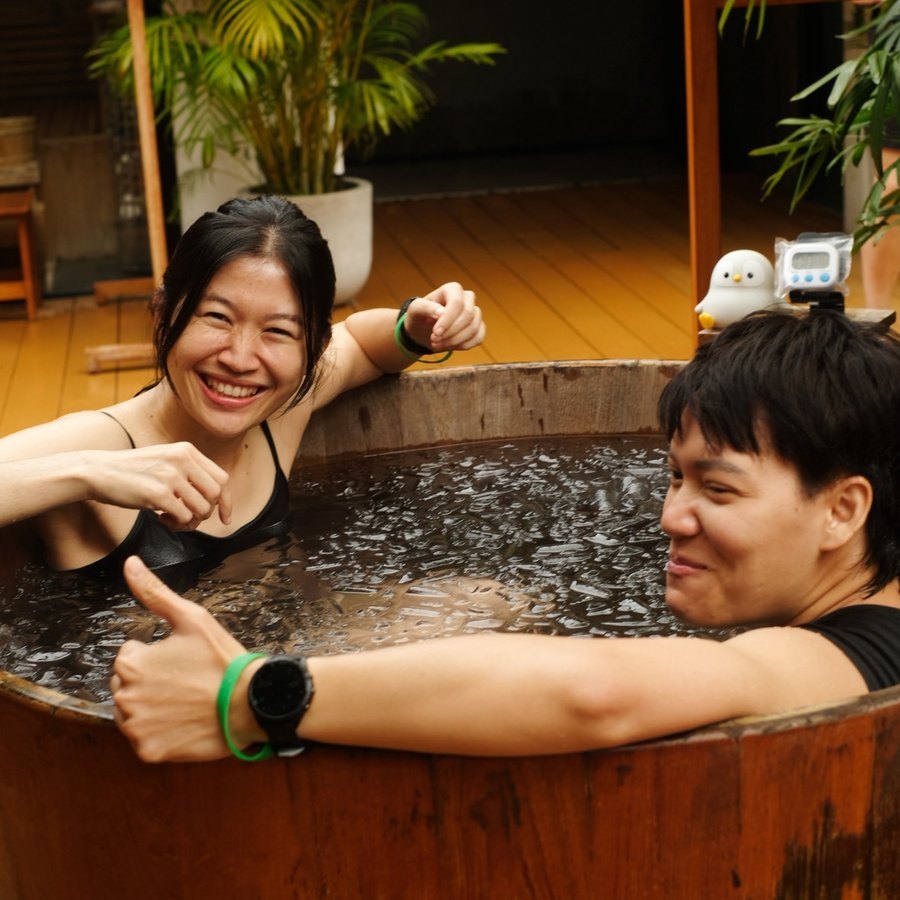
A few years ago, ice baths were something you saw on professional athletes' social media. Today they appear on corporate retreat agendas across Asia, often alongside guided breathing and saunas. Some people love the idea immediately. Others are quietly terrified. Both reactions are reasonable, and a well-run recovery day makes room for both.
This guide explains what each of the three practices does, what the evidence actually supports, how to run them safely with a group, and how to make sure nobody feels pressured.
Breathwork: The Foundation
Breathing is the one part of the nervous system people can steer directly. Fast, shallow breathing signals danger; slow breathing with a long exhale signals safety. That is why breathwork comes first on any recovery day, and why it is used again before the cold.
The evidence here is encouraging. A 2023 Stanford study published in Cell Reports Medicine compared three five-minute daily breathing practices with mindfulness meditation over a month. "Cyclic sighing", a double inhale through the nose followed by a long, slow exhale through the mouth, produced the greatest improvement in mood and reduction in breathing rate. It is simple enough to teach a whole team in ten minutes, and people can use it before a difficult meeting the next day.
Cold Water Immersion: What We Know
Cold water triggers a short, sharp stress response: a gasp, a spike in heart rate, a rush of adrenaline. The theory behind deliberate cold exposure is that practising staying calm through that response, with slow breathing, trains a kind of stress resilience.
A 2025 systematic review in PLOS One, covering 11 studies and over 3,000 participants, found that cold water immersion was associated with reduced stress around 12 hours afterwards, and one large study within it linked regular cold showers to about 29% fewer self-reported sickness absences. The review also noted improvements in sleep quality and quality of life in some studies. The authors were careful to say that effects vary with temperature and duration and that more research is needed. That is a fair stance for any retreat organiser to adopt: promising, enjoyable for many, and not a cure-all.
Sauna: The Gentle Partner
Heat is the more approachable half of contrast therapy. A long-running Finnish study of more than 2,300 middle-aged men found that those who used a sauna four to seven times a week had a substantially lower risk of fatal cardiovascular events than those who went once a week. This was an observational study, so it shows an association, not cause and effect; regular sauna users may differ in other ways. Sauna is safe for most healthy adults, but check with a doctor first if you have a heart condition, high or low blood pressure, or are pregnant. It is deeply relaxing, and often the part of the day people talk about most.
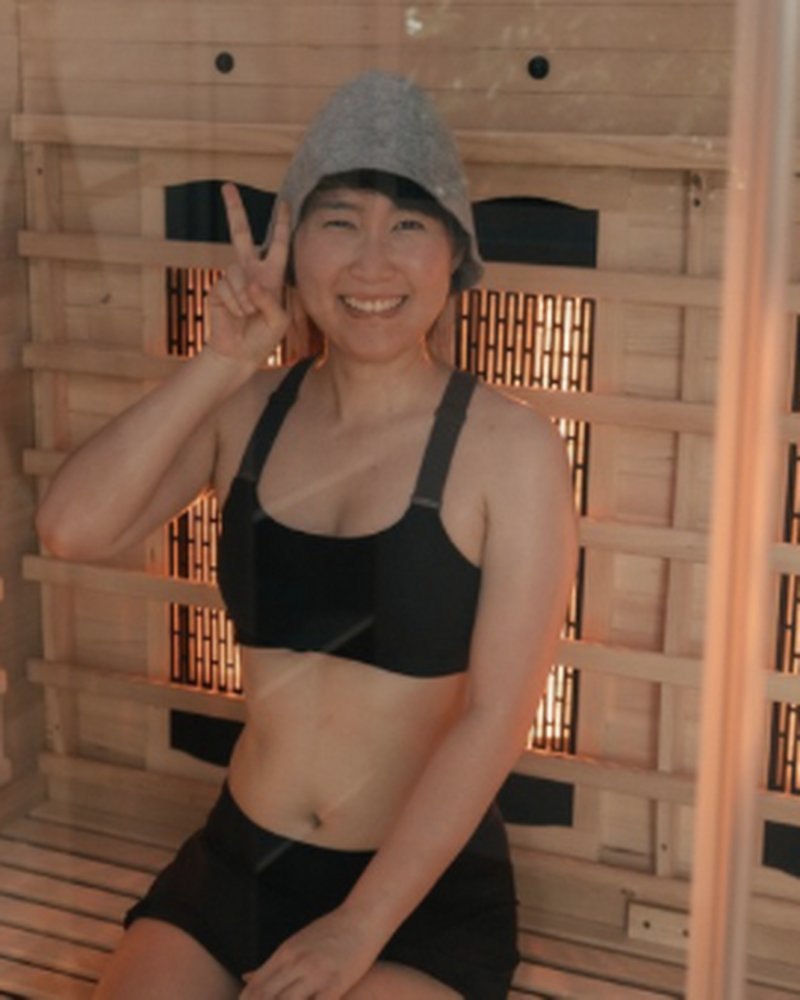
Heat is the more approachable half of contrast therapy, and often the most social.
How to Run a Safe Team Session
- Screen privately in advance. Ask about heart conditions, high blood pressure, pregnancy, Raynaud's syndrome and recent illness. People with these conditions should skip the cold or check with their doctor first.
- Make every step optional. Offer levels: watch, put hands in, sit to the waist, or full immersion. Celebrate every level equally.
- Breathe first, then enter. A few minutes of slow breathing before the plunge, and the guide breathing with each person as they go in.
- Keep it short. For beginners, 30 seconds to two minutes is plenty. Longer is not better.
- Have trained staff present. Someone who knows the warning signs of cold shock should be beside the tub at all times, with towels and warm drinks ready.
- No alcohol before or between rounds, and plenty of water throughout.
A Sample Recovery Morning
A simple flow works well: 20 minutes of guided breathing, 15 minutes in the sauna, the optional cold plunge, then rest lying down with a blanket and quiet music, and finally a short circle where people share one word about how they feel. The whole sequence takes about 90 minutes. Many teams say the shared nerves and laughter around the cold tub did more for team spirit than any game.
Frequently Asked Questions
Is an ice bath safe for employees? For most healthy adults, a short, supervised cold plunge is low risk. People with heart conditions, high blood pressure or who are pregnant should check with a doctor first and can skip it; participation should always be optional. How long should you stay in an ice bath? Start with 30 seconds to two minutes. Longer is not better, and the breathing technique before and during matters more than duration. What is contrast therapy? Contrast therapy alternates heat, such as a sauna, with cold water. Many people find it energising and relaxing, though research on specific health benefits is still developing.
Healiday's Recovery & Performance Retreat (3 days, 2 nights in Khao Yai, for teams of 10 or more) includes an eight-station recovery circuit built around these practices, always led by trained facilitators. For a broader menu of options, see our list of wellness activities for employees.
Sources
- Cell Reports Medicine (2023): Brief structured respiration practices
- Cain et al., PLOS One (2025): Effects of cold-water immersion on health and wellbeing
- Laukkanen et al., JAMA Internal Medicine (2015): Sauna bathing and fatal cardiovascular events
This article is for general information and is not medical advice. Healiday retreats are wellness programs and do not diagnose, treat or cure any medical condition. Health screenings and therapies are provided by licensed partner facilities, subject to medical suitability, and individual experiences vary.