When most people decide they need to get out of Bangkok, their minds go straight to Phuket or Koh Samui. You start searching flights, comparing hotels, mentally calculating whether a four-day trip is actually enough. And somewhere in the middle of all that planning, the exhaustion you were trying to escape gets a little heavier.
Rayong is not Phuket. It is not Koh Samui. And for a specific kind of tired, that is exactly the point.
The Problem with Chasing Distance
We assume recovering from city life means getting as far from it as possible. More kilometers, more recovery. It sounds logical. But that skips the point. A tired mind often needs less noise, not a bigger destination.
Phuket and Samui are beautiful. They are also loud in ways that go beyond sound. The beach clubs, the crowds, the energy of a place that is always performing for visitors. You arrive, you adjust, and you spend the first two days doing something that feels suspiciously like work. Getting oriented. Keeping up. That is not recovery. That is just a different kind of stimulation.

Rayong does not ask anything of you when you arrive. It is a quieter coast, an easier drive, and a place that most Bangkok professionals have not bothered with because nobody told them to. That gap in attention is what makes it useful.
Why a Different Kind of Environment Helps
Something called attention restoration theory explains a pattern that most high-functioning people recognize without being able to name.
Your brain runs two kinds of attention. The first is directed attention, the focused, deliberate kind you use to write a brief, run a meeting, or make a decision under pressure. It is also the first thing to run dry. The second is involuntary attention, the effortless kind that kicks in when you watch the ocean, walk through trees, or sit somewhere quiet. This is not passive. According to the theory, it is what gives directed attention a chance to rest.
The problem is that most environments we escape to are built for stimulation, not restoration. A busy beach resort gives your eyes somewhere to look. It does not give your brain anywhere to switch off. And if what you are carrying is the fog from months of high-stakes decisions and fragmented sleep, a beautiful but noisy place will not clear it. You come home with a tan and the same fog.
Mental fatigue is not vague. It shows up as slower recall, difficulty finishing thoughts, a flatness in situations that used to feel engaging, and a version of yourself that keeps reaching for the next thing without quite landing on it. Most people put this down to stress. Attention restoration theory offers another way to see it: your directed attention may have been running without a real break for far too long.

What changes this is not rest. It is the right environment, at the right time, long enough for you to properly switch off.
Why Rayong Works for This
Rayong sits on Thailand's eastern Gulf coast, southeast of Bangkok. It is known locally for its orchards and seafood, and is largely overlooked by international visitors because the obvious destinations pull attention elsewhere. Expats in Bangkok come here on weekends. Most tourists do not. That gap is exactly what makes it useful.
The quiet coastline of Rayong offers space to slow down.
The coast here is not dramatic. No cliffs, no famous viewpoints. What it has is space, quiet water, and a landscape that asks nothing of you. Attention restoration theory (Kaplan, 1995) suggests natural settings can help a tired mind recover. Low stimulation, open views, and nothing pulling at your directed attention. That is all it needs to be.
Our partner venue, Aksorn Wellness, sits on this stretch of coast.

Our partner venue, Aksorn Wellness, offers a calm coastal space designed for slowing down.
Focus Reset is based here because the environment supports the work. You might start the morning with a breathwork session facing open water, then take a guided walk through the property with no phone and no agenda. Afternoons run with structured quiet rather than a packed schedule, enough space to genuinely slow down rather than just pause. These are not optional extras. They are the heart of the program. Switching off is hard in a loud place; it comes more easily when the environment has stopped asking anything of you.
Energy Reset adds a more physical focus alongside the quiet time. The Reset Journey is designed for people who recognise that what they are carrying is not just a bad week but an accumulated pattern that a weekend has not been able to shift.
If you need to step off the hotel grounds, the surrounding area supports this slower pace rather than fighting it.
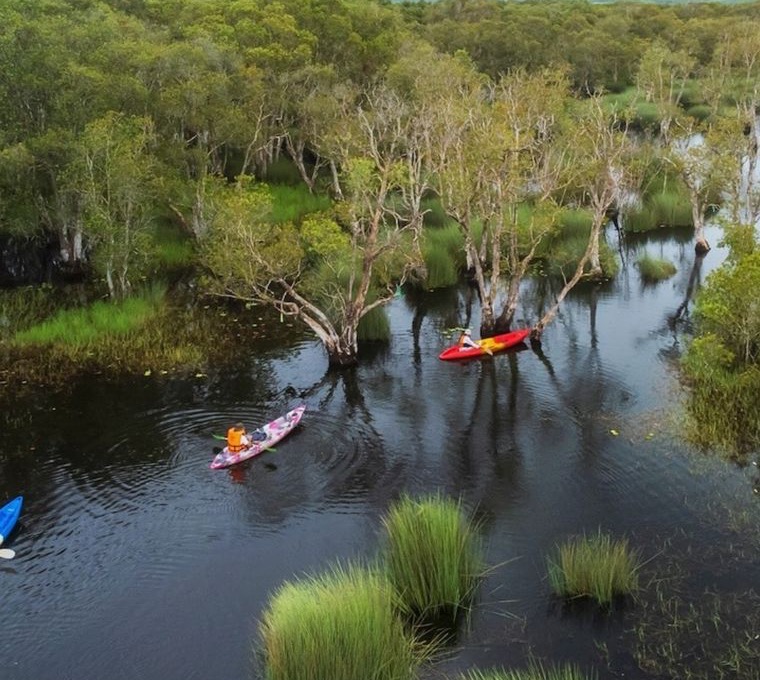
You can easily access:
Rayong Botanical Garden
Nature-based settings offer the kind of quiet that lets your attention wander and rest.
Local Orchards and Fresh Produce

Fresh food made with local produce is one of the simple pleasures of slowing down.
What the Right Environment Actually Changes
When you finally get some real quiet, many people notice a difference. Decisions that felt heavy can start to move. The sense of watching yourself from a slight distance may begin to lift. Conversations can feel less effortful, and the mental queue gets quieter.
None of this happens because you lie on a beach. It happens because the environment stopped demanding something from you long enough for you to properly switch off.
What You Take Home
Rayong changes the math for anyone who has put off a proper reset because the planning felt like too much, or because a full week away seemed out of reach. You can leave Bangkok on a Friday afternoon. By Sunday, the volume is turned down, not just muted.
That is what choosing quiet over spectacular actually buys you. Not the photograph. What you come home with is the memory of a few days that asked nothing of you, and some room to think. The programs at our partner venue, Aksorn Wellness, are built for exactly that, closer than most people assume, and designed for the kind of tired that a beautiful view cannot fix.
This article is for general information and is not medical advice. Healiday retreats are wellness programs and do not diagnose, treat or cure any medical condition. Health screenings and therapies are provided by licensed partner facilities, subject to medical suitability, and individual experiences vary.