

When people talk about loneliness at work, they usually picture someone working from a spare bedroom, cameras off, days passing without a real conversation. Fair enough. But a 2026 study from Bangkok looked at people who come into the office every day, and found that loneliness still sat right in the middle of how their jobs affected their wellbeing.
That's a useful wake-up call for leaders and HR teams in Thailand and across Asia. Being surrounded by colleagues isn't the same as feeling connected to them, and the way work is designed seems to shape which one people experience.
What the Bangkok study found
Researchers from Chulalongkorn Business School and Mahasarakham Business School surveyed 606 full-time, onsite employees in Bangkok and published their findings in the Asia-Pacific Journal of Business Administration in June 2026. They tested how three features of a job relate to loneliness and wellbeing:
- Job control, meaning how much say people have over how and when they do their work
- Social support from colleagues and managers
- Job demands, meaning workload, pace and pressure
According to the published abstract, more job control and more social support went with less workplace loneliness, while higher job demands went with more. Loneliness, in turn, went with lower wellbeing. People who scored higher on resilience showed a weaker link between loneliness and wellbeing.
The "I didn't know that" part: loneliness was the route, not a side effect
Here's the finding that makes this study more than another "loneliness is bad" headline. In the researchers' model, loneliness fully mediated the link between job control and wellbeing, and between job demands and wellbeing (for social support, the mediation was only partial). Put simply, in this sample, the way control and demands related to wellbeing ran through loneliness.
That reframes a familiar problem. We usually treat workload and autonomy as productivity issues and loneliness as a personal or social one. This study suggests they may be the same issue. When people are overloaded and have little say, they may also become more isolated: no time for a chat, no energy for lunch together, no room to ask for help. And that isolation may be part of how a heavy job wears people down.
It also means the fix may not be a social event. If job design is driving disconnection, a quarterly party won't undo it.
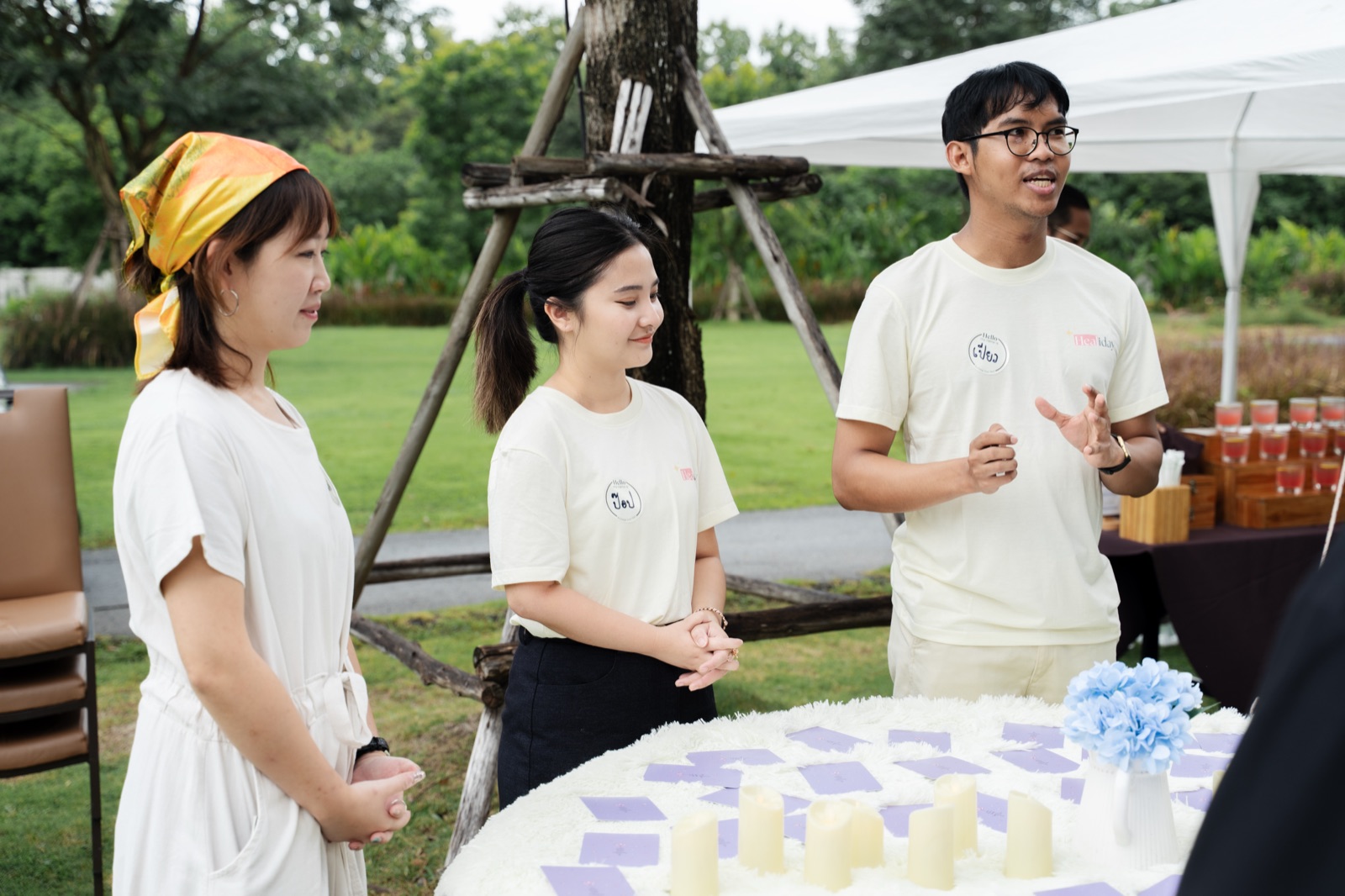
The Healiday team introducing a small-group activity in Khao Yai.
Does loneliness actually make people leave?
A separate study from Japan suggests it may matter for retention too. Researchers followed 706 full-time employees in Japan for six months in 2024 and published the results in the Journal of Occupational Health in 2025. People who reported more workplace loneliness at the start were more likely to have left their job six months later: depending on the loneliness scale used, each one-standard-deviation increase was associated with roughly 1.3 to 1.5 times higher odds of leaving. Only 47 people left during the study, so the numbers are small.
What the evidence does and doesn't show
Both studies are worth taking seriously, and both have limits:
- The Bangkok study is a single survey. It shows associations between job features, loneliness and wellbeing at one point in time. It can't prove that loneliness causes lower wellbeing, and we were only able to review the published abstract, not the full results.
- The Japanese study followed people over time, which is stronger, but it is still observational. Its authors note that their sample was more highly educated than Japanese workers overall, some of the loneliness measures were not fully validated, and unmeasured factors such as personality may play a role.
- Neither study looked at executives specifically. The lessons about job design apply broadly, but we shouldn't claim more than the data shows.
Practical takeaways for leaders and HR
You can't schedule people into feeling connected, but you can design work so connection has room to happen.
1. Give back some control
Look for one area where your team could decide how or when work gets done: meeting-free blocks, choice of project order, flexible start times. In the Bangkok study, job control was linked to less loneliness.
2. Make support visible, not assumed
Managers often assume they're approachable, but teams don't always feel free to ask for help. Regular one-to-ones that include a simple "what's getting in your way?" make support concrete.
3. Treat overload as a connection risk
When a team is short-staffed, the first things to go are lunch together, hallway conversations and helping each other. Protect a little shared time, even when deadlines are tight.
4. Design shared experiences that aren't about work
Activities where colleagues do something new side by side, such as a walk, a workshop or a simple hands-on task, create easier conversation than another drinks reception. Keep groups small enough that nobody hides at the edge.
5. Don't forget leaders
Senior people often have the fewest peers to talk to honestly. A peer circle or a leadership-team retreat with real downtime can give leaders the connection they rarely get at the office.
6. Know when to point people to professional support
Loneliness can sit alongside low mood or anxiety. If someone is struggling, encourage them to speak to a doctor or counsellor. In Thailand, the 1323 mental health hotline is available 24 hours a day.
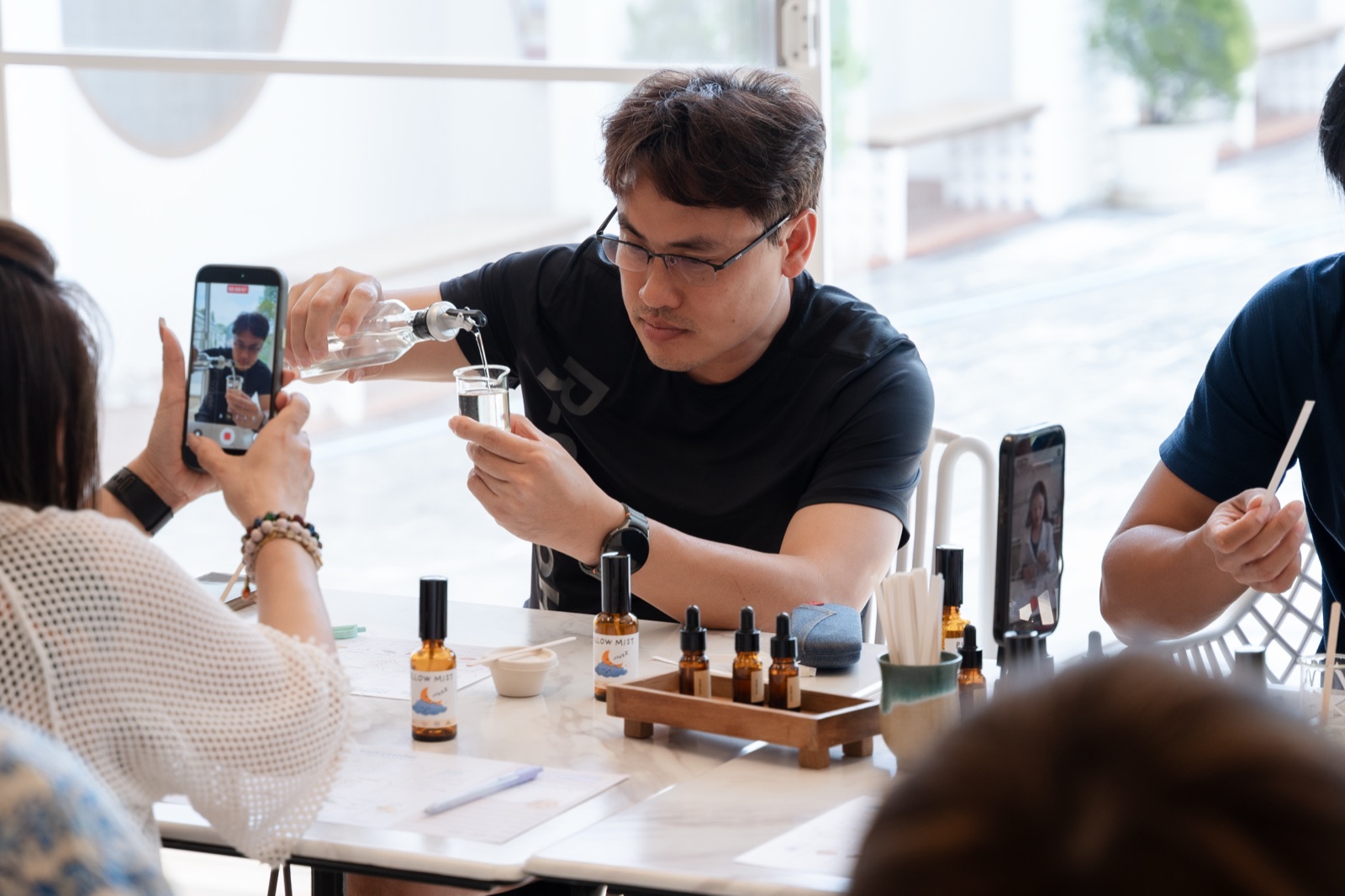
A hands-on scent-blending workshop during a Healiday group program.
Where Healiday fits
We design our group programs around exactly these ingredients: small groups, shared experiences and time to actually talk. Options include a guided Forest Bathing session at Bang Krachao, a three-hour session in a private space about 30 minutes from Bangkok, as well as half-day sessions we can bring into your office.
For leadership teams, our Executive Resilience Retreat is a two-day, one-night program in Khao Yai, about 2.5 to 3 hours by road from Bangkok, for teams of 10 or more. Teams wanting more recovery time can choose the three-day, two-night Recovery & Performance Retreat, also in Khao Yai for teams of 10 or more. Its cold and heat sessions, such as ice baths and saunas, aren't suitable for everyone, including people with heart conditions or high blood pressure, or during pregnancy, so every guest is screened first.
Our Khao Yai retreats include a short baseline check-in a week before using the CBI, PSS-10 and WHO-5 questionnaires, HRV tracked with a smartwatch as an indicative, group-level recovery measure, and a re-check seven days afterwards, with an anonymous aggregate report for HR. Participation is voluntary and every participant gives explicit consent.

An instructor-led movement session on the lawn during a Healiday group program.
Frequently asked questions
What causes loneliness at work?
Research points to the way work is designed as well as personal factors. A 2026 study of 606 onsite employees in Bangkok found that low job control, low social support and high job demands were all linked to more workplace loneliness.
Can you be lonely at work if you work in an office?
Yes. The Bangkok study surveyed full-time employees who work onsite and still found loneliness closely tied to their wellbeing. Being around colleagues isn't the same as feeling supported by them.
Does workplace loneliness affect staff turnover?
A six-month study of 706 employees in Japan found that people reporting more workplace loneliness were more likely to leave their jobs, though the study was observational and relatively small.
What can managers do about loneliness at work?
Give people more say over how they work, make support visible through regular one-to-ones, protect shared time when workloads rise, and create small-group experiences that aren't about work.
Bring your team closer
Connection is easier to build when work leaves room for it. Enquire about a group program for your team or leadership group, and we'll design a day that gives people time to talk. Make your holiday a Healiday.
Sources
- Popaitoon P, Popaitoon S. "Surviving loneliness at work: how job design and resilience shape employee well-being." Asia-Pacific Journal of Business Administration (published online 30 June 2026)
- Sasaki N, Tsuno K, Kuroda R, et al. "Workplace loneliness and job turnover: a 6-month prospective study." Journal of Occupational Health 67(1), uiaf009 (2025)
- Department of Mental Health – 1323 mental health hotline ("1323 All time for all Thai")
- Healiday – Group programs
This article is for general information and is not medical advice. Healiday retreats are wellness programs and do not diagnose, treat or cure any medical condition. Health screenings and therapies are provided by licensed partner facilities, subject to medical suitability, and individual experiences vary.