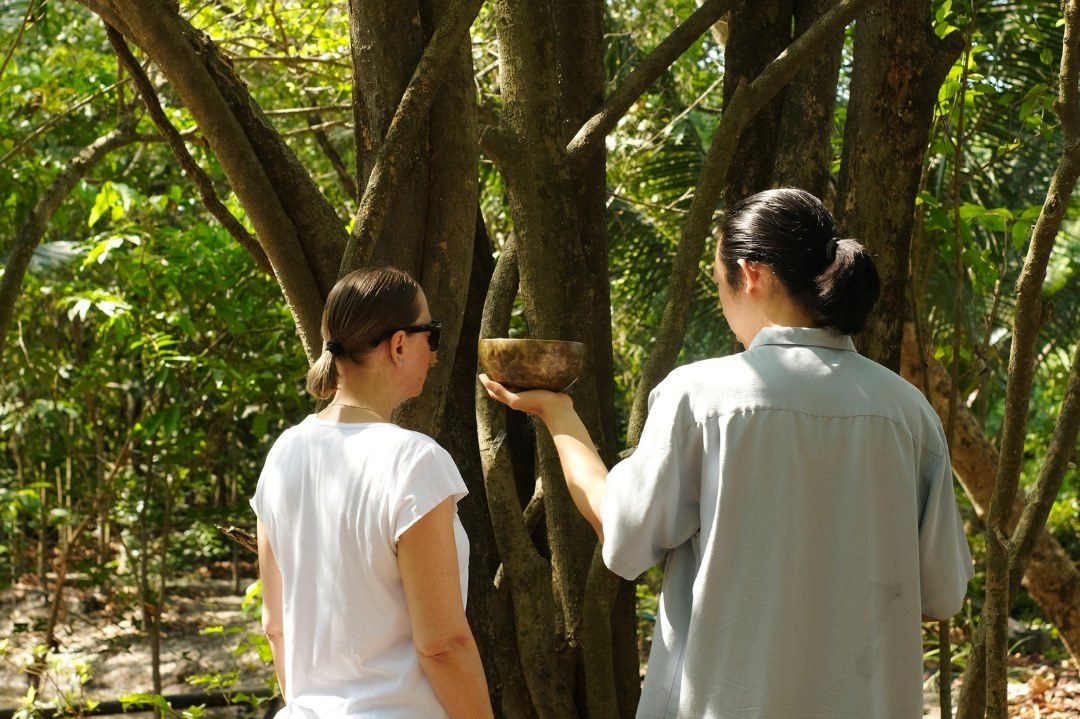
Bangkok is one of the most exciting cities in Asia and one of the hardest places to switch off. Traffic, heat, noise and long working hours mean many people spend weeks without ever seeing a horizon that is not a building. Forest bathing offers a remarkably simple counterweight. It asks you to do almost nothing: go to a forest, slow down, and let your senses take over. The surprising part is how much evidence now supports it, and how close to the city you can do it.
What Forest Bathing Is (and Isn't)
The term shinrin-yoku, literally "taking in the forest atmosphere", was introduced by Japan's forestry agency in 1982 as a public health idea for an overworked population. It is not hiking, trail running or a nature tour. There is no destination and no distance target. A typical session covers less than two kilometres in two or three hours. You walk slowly, stop often, touch bark and leaves, listen, breathe the air, and sit for a while somewhere that feels right. A guide usually offers simple "invitations" to notice things: five sounds you can hear, the temperature of the air, the movement of light.
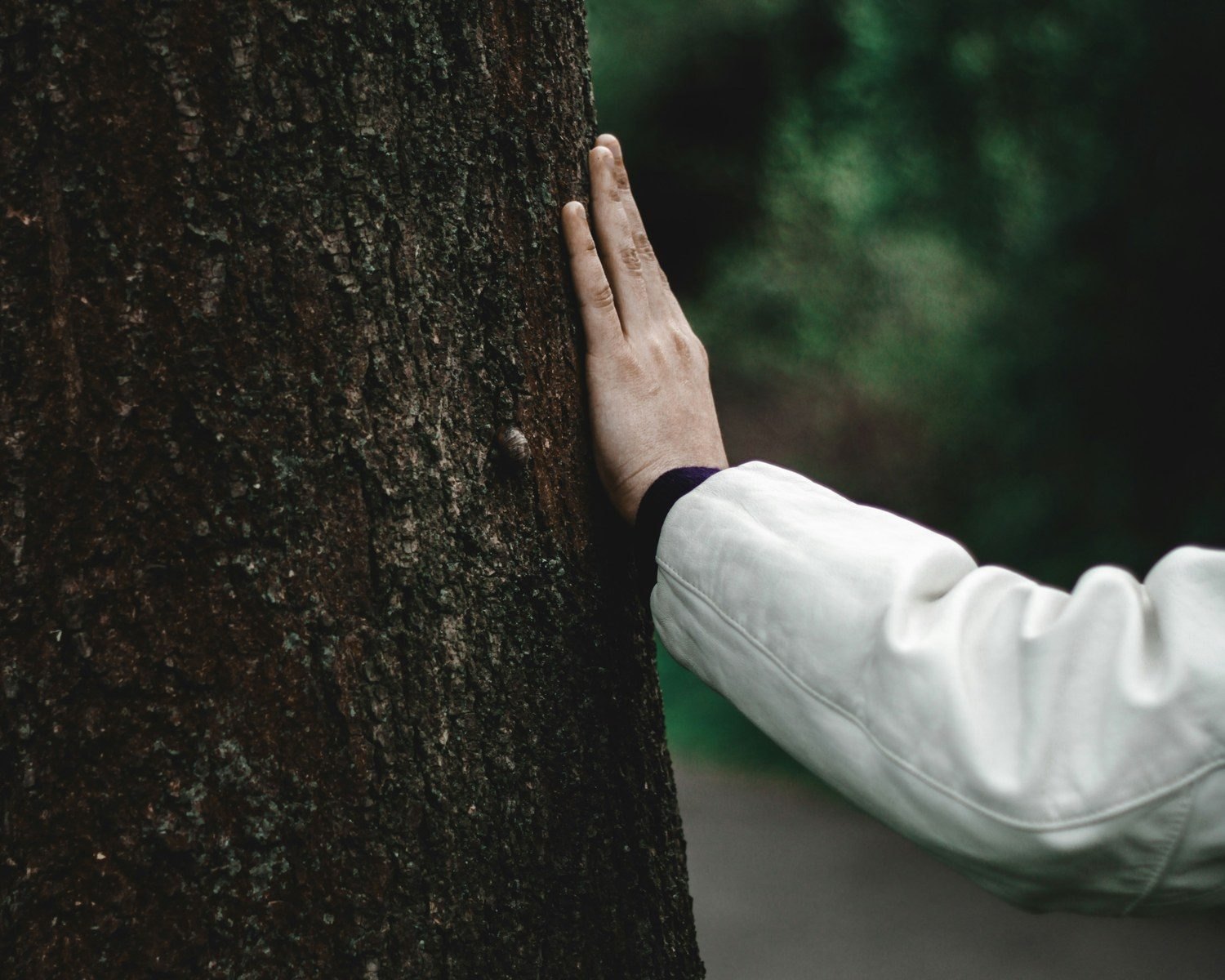
Touch is part of the practice: bark, leaves, water and stone bring attention back to the body.
Why It Works: What the Research Says
Dr Qing Li of Nippon Medical School led some of the best-known studies. In one, healthy adults who spent a few days walking in forests showed higher activity of natural killer cells, part of the immune system's defence against infection, along with lower levels of stress hormones. Some of the effect was linked to phytoncides, aromatic compounds released by trees. Later studies have reported that time in forests and green space is associated with lower blood pressure and heart rate, better mood and reduced anxiety and mental fatigue compared with time in urban settings.
Two honest caveats. First, many studies are small, and the effects are modest rather than dramatic. Second, part of the benefit almost certainly comes from things that are not unique to forests: slowing down, being away from screens, and paying attention to the present moment. That is not a weakness. It simply means forest bathing is one of the easiest ways to get all of those benefits at once.
Where to Try It Near Bangkok
- Bang Krachao (about 30 minutes). Known as Bangkok's green lung, this loop of the Chao Phraya River in Samut Prakan is a patchwork of mangroves, orchards and raised walkways. Sri Nakhon Khuean Khan Park is the easiest starting point. Ideal for a short session or a slow bicycle ride. Healiday runs Forest Bathing at Bang Krachao, a 3-hour session in a private space, 30 minutes from Bangkok.
- Nakhon Nayok (about 2 hours). Foothills of the Khao Yai range, waterfalls such as Sarika, and quiet rural roads. Far fewer visitors than the national parks, and an easy day trip.
- Khao Yai (about 2.5–3 hours by road, around 180 km). Part of a UNESCO World Heritage forest complex, with genuine evergreen forest, cooler air from November to February and many quiet places to stay. The best choice for a full weekend with two or three sessions.
- Prachinburi and the eastern edge of Khao Yai (about 2.5 hours). Waterfalls, streams and the herbal-medicine heritage of Prachinburi make it a good fit for a slower, more restorative weekend.
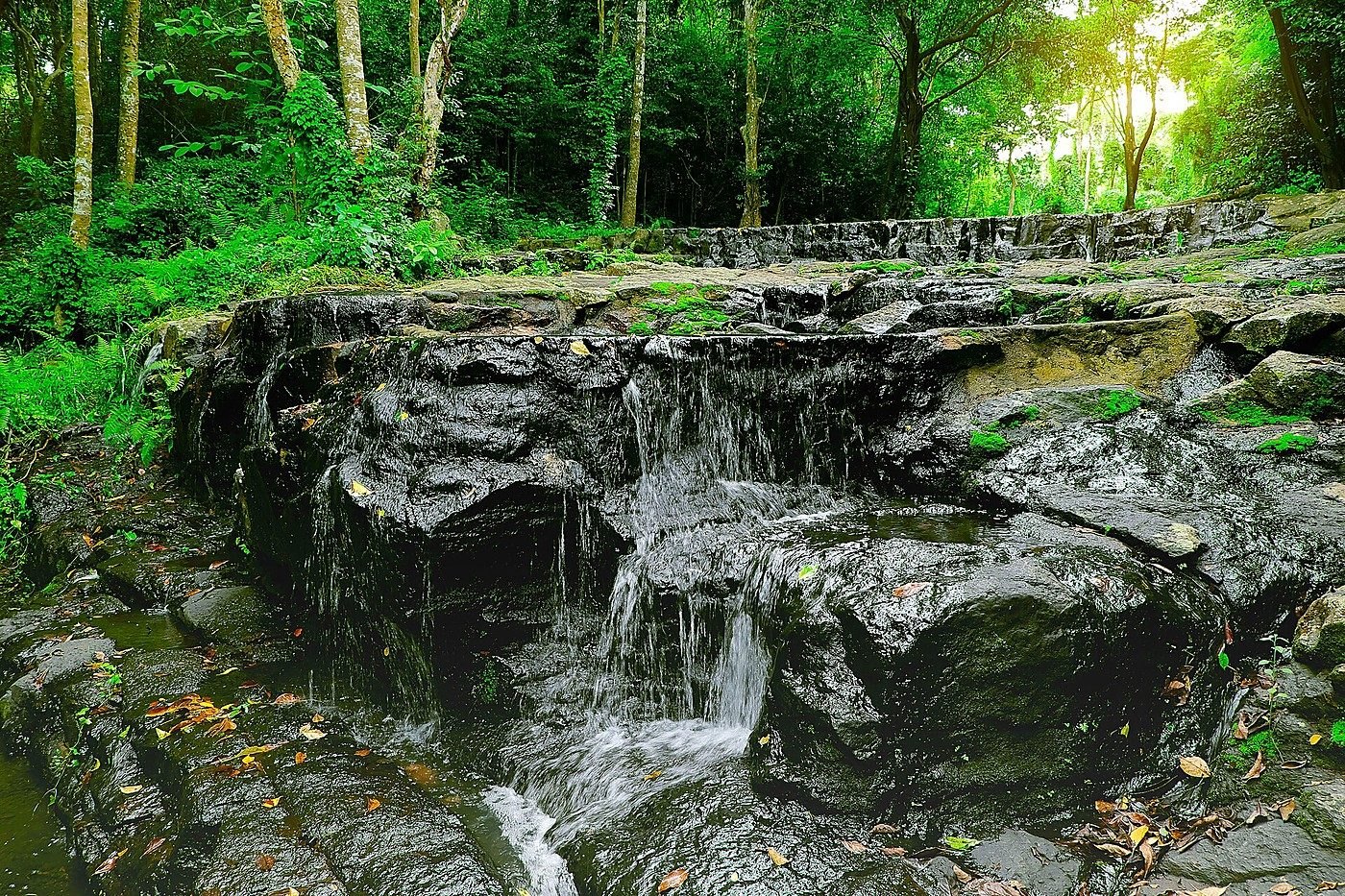
Water is one of the most calming elements of any forest walk.
How to Get the Most From Your First Session
- Go early. Mornings are cooler, quieter and better for wildlife. In Thailand, starting by 7 or 8 a.m. makes a real difference.
- Put the phone away. One photo at the end is fine. Checking messages during the walk cancels much of the benefit.
- Walk slower than feels natural. Then slower again. Most people realise how fast they normally move only when they try this.
- Use a guide the first time. A trained guide makes it far easier to settle, especially for people who find stillness uncomfortable.
Frequently Asked Questions
How long should a forest bathing session be? Around two hours is typical for a guided session, but even 20 to 30 minutes among trees has been linked to lower stress. Is forest bathing the same as hiking? No. Hiking is about distance and effort; forest bathing is slow, short and focused on the senses. Can teams do forest bathing together? Yes. It works well as a quiet, inclusive team activity because it needs no fitness or skill, and many companies now add it to offsites and retreats.
Sources
- Li Q. (2010), Effect of forest bathing trips on human immune function
- Tourism Authority of Thailand (TAT News): Inner-city eco-tourism in Bang Krachao
This article is for general information and is not medical advice. Healiday retreats are wellness programs and do not diagnose, treat or cure any medical condition. Health screenings and therapies are provided by licensed partner facilities, subject to medical suitability, and individual experiences vary.